


Search Here
Table of Contents
|
That late-afternoon feeling when the back feels damp against the chair, when users have shifted positions three times in the last hour trying to get comfortable—the seating choice plays a larger role in this than users might expect. A mesh task chair approaches support and comfort quite differently from the cushioned office chairs many users grew up seeing.
The materials and construction behind a chair influence everything from how warm users feel to how the spine is supported. Understanding these differences helps users recognise what might work better for specific work patterns and environments.
The fundamental difference between mesh and traditional seating lies in how each manages airflow, support, and body contact. These distinctions become increasingly apparent the longer users sit.
Traditional office chairs rely on foam padding covered with fabric, leather, or synthetic materials. This construction creates a solid barrier between the body and the chair frame. Foam density determines the cushioning level, and the upholstery material determines the surface feel.
A mesh task chair takes an entirely different approach. The mesh fabric is stretched taut across the chair frame, creating a suspended seating surface. This open-weave structure allows air, heat, and moisture to pass through freely rather than becoming trapped. As a result, mesh chairs generally feel cooler and more breathable than upholstered foam chairs during prolonged sitting.
The mesh itself uses tensioned elastomeric fibres that have enough stretch capacity. This prevents the "bottoming out" sensation while still contouring to every unique body shape. Unlike foam that compresses uniformly, mesh distributes weight across its entire surface through tension rather than compression.
Temperature regulation might seem like a minor comfort factor until users have spent several hours in a chair that traps heat. When traditional upholstery materials have low vapour permeability, they trap warm, humid air between the body and the chair surface. As a user's core temperature rises even slightly, perspiration begins, but the moisture has nowhere to go. This creates the sticky sensation that triggers constant position adjustments.
Research indicates that mesh shows a considerable improvement in moisture management compared to traditional fabric, reducing microbial growth risk and skin irritation. When the body maintains a comfortable temperature, users experience less restlessness, fatigue, and concentration loss. Most office workers report discomfort from poor ventilation—a problem mesh construction directly addresses.
These principles are increasingly reflected in modern ergonomic seating. For example, the Wipro Adapt combines a breathable mesh backrest with an Aeroflo seat designed to improve airflow around the user. Rather than treating breathability as a standalone feature, the chair integrates ventilation with weight distribution and ergonomic support, illustrating how contemporary task chairs are designed to enhance comfort throughout long workdays.
Comfort perception changes depending on whether users have been sitting for fifteen minutes or five hours. This temporal pattern reveals important differences between chair types.
When a user first sits on a fabric chair, the experience is immediate, cushioned, and soft. The foam padding compresses beneath the weight, creating that familiar sinking sensation. This instant comfort requires no adjustment period—it simply feels welcoming from the first moment.
A mesh task chair offers a different initial experience. The tensioned surface feels firmer and more responsive. Some people describe it as sitting on a supportive hammock rather than a plush cushion. This firmness can feel unfamiliar if users are accustomed to traditional upholstery, and some users need a few days to appreciate the mesh approach.
Fabric chairs suit traditional office aesthetics and provide natural insulation in cooler, heavily air-conditioned environments. They're widely available across price points and come in countless colours and textures.
The comfort story shifts significantly over time. Foam padding absorbs and retains heat, meaning that after one to two hours, traditional chairs become noticeably warmer. What felt soft and welcoming initially now feels like a heat trap, especially during warmer months or in offices where climate control fluctuates.
Mesh maintains consistent comfort throughout extended sessions. Many users find that the breathable, flexible support becomes more comfortable over time, with mesh conforming to body shape in ways that lead to better weight distribution and reduced pressure points. The dynamic contouring supports the body through various angles without the lag time of foam recovery, which is particularly valuable for those who shift positions frequently.
|
Comfort Factor |
Traditional Upholstered Chair |
Mesh Task Chair |
|---|---|---|
|
Initial Feel |
Soft, plush, immediately comfortable |
Firmer, responsive, requires adjustment |
|
After 2-3 Hours |
Warmer, heat retention begins. |
Maintains consistent temperature |
|
After 5+ Hours |
Can feel sticky, triggers repositioning |
Sustained comfort, less fidgeting needed |
|
Position Changes |
Foam recovery creates a brief lag. |
Instant response to movement |
Both mesh and traditional chairs can include ergonomic features, but the support mechanisms operate quite differently. Understanding these distinctions helps explain why many organisations are transitioning to mesh seating for task-intensive work.
Traditional chairs provide support through padding thickness and density. The foam compresses uniformly under the user's weight, and comfort depends on the material quality itself. Once the padding is shaped, it offers fixed support regardless of how a person sits or moves.
Quality mesh chairs combine the suspended mesh surface with adjustable structural elements. Support comes from the frame engineering rather than padding alone. The mesh material itself becomes an engineering component that determines how force distributes across the musculoskeletal system. According to EU-OSHA research, static postures can lead to increased pressure on intervertebral discs and reduced nutrient flow to spinal structures—mesh's dynamic response helps address this concern.
Designs like the Wipro It's Me reflect this design philosophy. Apart from featuring a mesh back, it also has an automatic-weight-sensing mechanism. This makes it very multi-user-friendly.
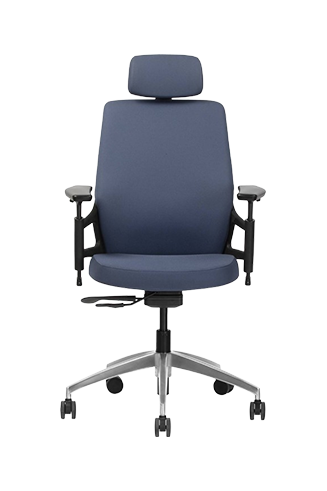
A well-designed mesh back office chair with arms addresses comfort beyond just the backrest. Adjustable armrests prevent shoulder tension by supporting the forearms at the correct height, reducing strain on the neck and upper back muscles that work overtime when the arms hang unsupported.
The combination matters: a mesh back for breathability, adjustable lumbar support for the lower spine, and properly positioned armrests for upper body alignment. This integrated approach proves particularly valuable for desk workers spending six to eight hours daily at their workstations.
Back pain is one of the most common musculoskeletal complaints among office workers. While its causes are multifactorial, ergonomic workstation design—including appropriately adjusted armrests that support the forearms and keep the shoulders relaxed—can help reduce upper-body muscle loading and contribute to more comfortable computer work.
A working environment significantly influences which chair type serves a user better. Temperature, humidity, and climate control reliability all factor into this decision.
Mesh seating excels in warm environments or spaces with inconsistent air conditioning. During power fluctuations or in offices that run warm, mesh maintains a cool, comfortable temperature even during extended sitting sessions. For workspaces in regions with hot summers or high humidity, this thermal advantage becomes genuinely meaningful.
However, fabric chairs provide insulation that some users prefer in heavily air-conditioned offices. During cooler months, some find that budget mesh options feel less warm than traditional upholstery. Quality mesh designs balance breathability with sufficient body warmth retention—an important consideration when selecting between options.
Consider these factors when evaluating your workspace needs:
How consistently does the office climate control function?
Do users tend to feel warm while working, even when others feel comfortable?
Does the commute leave users warm before the start of a workday?
How many hours daily do users spend seated at the primary workstation?
The choice between mesh and traditional seating depends on understanding the work patterns, physical preferences, and environmental factors.
Traditional upholstered chairs remain appropriate in certain contexts. For conference rooms where people sit for shorter periods, cushioned seating provides immediate comfort without requiring adjustment time. In executive settings where aesthetic consistency matters, traditional leather or fabric options maintain a formal appearance. Heavily air-conditioned environments where warmth is welcome rather than avoided also suit traditional approaches.
If a user's daily seated time remains under two hours in any single session, the long-term comfort advantages of mesh become less pronounced. The immediate softness of traditional padding may better suit the needs.
A mesh task chair likely serves users well if extended hours are spent at the desk, if positions are shifted frequently, or individuals are constantly adjusting due to thermal discomfort.
Consider mesh seating if the users
Work more than four hours daily at a single desk
Experience back discomfort during or after work
Are frequently repositioning due to warmth
Value chair features that adapt to natural movement
Work in warmer environments or spaces with variable climate control
The seating choice shapes a user's daily comfort in ways both subtle and significant. A mesh task chair offers distinct advantages in breathability, long-term comfort, and dynamic support, while traditional upholstery provides immediate cushioned softness that suits shorter sessions and cooler environments. The right choice depends on the work patterns, physical preferences, and workspace conditions.
When considering the next seating decision, explore Wipro's ergonomic task zone office chair collection is designed to support comfort, posture, and productivity throughout demanding workdays.
1. How does a mesh task chair stay comfortable during long work hours?
A mesh task chair maintains comfort through continuous airflow that prevents heat buildup and moisture retention. The tensioned fabric contours to the body shape while distributing weight evenly, reducing pressure points that cause discomfort during extended sitting.
2. Are mesh back office chairs with arms suitable for warmer climates?
Yes, a mesh-back office chair with arms excels in warm environments. The open-weave construction allows significantly more airflow than solid upholstery, keeping users cooler and reducing the sticky sensation that triggers constant repositioning.
3. Do mesh chairs provide enough lumbar support compared to cushioned options?
Quality mesh chairs combine the breathable surface with adjustable lumbar mechanisms built into the frame structure. Support comes from engineering rather than padding thickness, often providing more targeted, adaptable lower back support.
4. Can mesh seating feel too firm for some users?
Initially, mesh may feel firmer than cushioned alternatives. Most users adjust within a few days and find the responsive support more comfortable over extended periods than foam that retains heat and compresses unevenly.
5. What features should I prioritise in a mesh-back office chair with arms?
Prioritise adjustable lumbar support, armrest height adjustment, seat depth control, and mesh quality with adequate stretch capacity. A mesh back office chair with arms combining these elements supports proper posture while maintaining breathability.
6. Is mesh seating appropriate for all office environments?
Mesh suits most modern office environments, particularly open-plan spaces and task-intensive workstations. Very cold, heavily air-conditioned spaces might benefit from traditional upholstery's insulating properties, though quality mesh designs minimise this concern.