


Search Here

Table of Contents
|
The chair quietly accompanies the user through morning emails, afternoon meetings, and those intense project sprints when hours slip by unnoticed. It's there when users lean forward to concentrate and settle back to think through a problem. But here's what most people miss: that chair can only truly provide support when its dimensions match the user's body.
The space between the seat's front edge and the back of the knees might seem like a small detail. Yet this measurement—adjustable seat depth—shapes everything from the posture to blood circulation. Below, we'll walk through why this feature deserves a user's attention and how to make it work for you.
The relationship between seat depth and physical wellbeing runs deeper than most people realise. This adjustment influences not just immediate comfort but long-term health outcomes that accumulate over years of desk work.
Behind the knee lies a vulnerable area called the popliteal fossa—a shallow depression housing major blood vessels and nerves. Unlike the thigh, which is protected by muscle and bone, this region remains relatively exposed. When a seat is too deep, the front edge presses directly against this sensitive area.
The consequences are significant. Sitting with bent hips and knees already causes arteries to narrow. Poor seat depth compounds this problem, potentially reducing blood flow through the popliteal artery considerably. Users might notice numbness, tingling, or cold legs during extended work sessions. Over time, restricted circulation can contribute to varicose veins, increased deep vein thrombosis risk, and persistent leg fatigue.
An office chair with adjustable seat depth allows users to create adequate clearance—typically 1-2 inches—between the seat edge and the back of the knees. This simple adjustment maintains healthy vascular flow throughout a workday.
Here's something that surprises many professionals: a user might own a chair with excellent lumbar support yet never actually benefit from it. The reason? Seat depth that doesn't match the leg length.
When the seat extends too far forward, pressing into the area behind the knees, the body instinctively slides forward to relieve the pressure. This seemingly minor adjustment creates a gap between the lower back and the backrest. The expensive lumbar support becomes useless because the spine never touches it.
This "perching" behaviour forces the pelvis into a posterior tilt. The lower spine flattens or rounds, increasing mechanical load on the L4 and L5 vertebrae—the most common sites for disc problems. According to OSHA guidelines, a proper ergonomic chair must allow users to sit against the backrest while maintaining knee clearance. Without adjustable seat depth, achieving both simultaneously becomes impossible for many body types.
Ergonomic science operates on one fundamental principle: there is no "average" person. A seat that fits a 5'10" professional perfectly might create serious discomfort for someone who is 5'2" or 6'3". This reality makes adjustability essential rather than optional.
The mismatch between fixed seat depth and varied body dimensions creates distinct
problems depending on whether the seat runs too deep or too shallow.
|
Seat Depth Issue |
Who It Affects |
Physical Consequences |
|---|---|---|
|
Too Deep |
Shorter individuals |
Knee pressure, sliding forward, loss of lumbar contact, slouching |
|
Too Shallow |
Taller individuals |
Inadequate thigh support, excess pressure on sit bones, lower back strain |
For shorter users, a deep seat forces a difficult choice: either let the edge dig into the back of the knees or slide forward and lose all back support. Neither option allows sustainable, comfortable work. For taller users, a shallow seat means the thighs extend past the seat's edge, leaving the legs unsupported. The weight of the legs then pulls on the lower back, accelerating fatigue.
The best office chair with adjustable seat depth resolves these issues by allowing the seat pan to travel enough to accommodate users from the 5th percentile female to the 95th percentile male.
Designs such as the Wipro Aerosit incorporate this adjustability alongside features like a contoured backrest, adjustable lumbar support, and an automatic weight-sensing mechanism. Together, these adjustments allow the chair to accommodate a broad range of users more effectively, making it easier to maintain ergonomic support throughout the workday rather than relying on a one-size-fits-all seating solution.
Industry guidelines exist specifically to ensure seating serves diverse populations. BIFMA G1-2013 guidelines recommend dimensions calculated to fit at least 90% of the working population. These standards recognise that bodies come in vastly different proportions.
|
Design Insight: True Ergonomics Requires Adjustability A chair isn't ergonomic simply because it has a lumbar bump. True ergonomic design enables the user to achieve a neutral posture—and that requires adjustments that match every unique body dimension, including seat depth. |
Understanding the importance of adjustable seat depth leads naturally to a practical question: how do you know if your current setup actually fits? Fortunately, simple methods exist for assessing and correcting your seat depth at any workstation.
This straightforward test takes thirty seconds and requires no special equipment:
Sit all the way back in your chair so the back touches the backrest.
Ensure the feet rest flat on the floor (adjust seat height if needed)
Make a fist with a hand
Place the fist sideways between the back of the knee and the seat's front edge.
If the fist fits with a little room to spare—roughly 2-3 fingers of space—the seat depth is appropriate. If the seat presses against the fist or the knee, the depth runs too deep. If a large gap exists, users may benefit from more thigh support.
Seat depth works best when adjusted as part of a complete setup sequence. Adjusting one element in isolation often creates new problems elsewhere.
The recommended order:
Feet first: Plant them flat on the floor or a footrest
Seat height: Adjust until the thighs are parallel to the floor, with hips slightly higher than the knees.
Seat depth: Slide the seat pan to achieve proper knee clearance while maintaining thigh support.
Lumbar support: Align the chair's curve with your spine's natural curve.
This sequence ensures each adjustment builds on the previous one. Starting with seat depth before establishing proper foot position, for instance, might lead a user to choose a setting that doesn't work once the overall posture is corrected.
The best office chair with adjustable seat depth makes this process intuitive, with accessible controls that allow quick modifications throughout a day.
The conversation about adjustable seat depth extends beyond physical comfort into territory that matters deeply to both individuals and organisations: sustained productivity and long-term health.
Physical discomfort creates a constant low-level distraction. When a user's legs feel numb or the lower back aches, part of the attention diverts to managing that discomfort rather than focusing on the work. Users fidget, shift position, stand up, and sit down—all activities that fragment concentration.
When a chair fits properly, these distractions fade. Studies indicate that people who predominantly sit at work face a 16% higher mortality risk from all causes and 34% higher cardiovascular disease mortality. While proper seating alone won't eliminate these risks, it represents one meaningful intervention in creating healthier work habits.
An office chair with adjustable seat depth contributes to this by
Reducing the urge to constantly shift positions
Maintaining stable, supported posture through long meetings
Preventing the afternoon fatigue that comes from fighting an ill-fitting chair
Supporting natural movement rather than forcing one rigid position
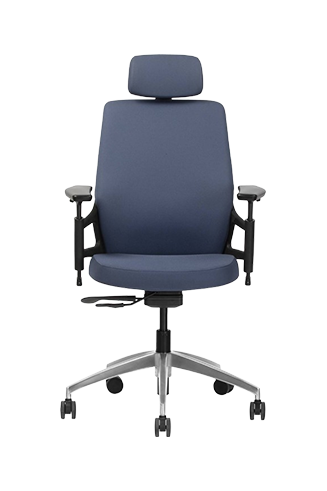
These principles are reflected in chairs such as the Wipro Absolute, which combines a seat slider with adjustable lumbar support and armrests to help users tailor the chair to their body dimensions and preferred working posture. Rather than relying on a fixed configuration, these adjustable features make it easier for a wider range of users to achieve consistent support throughout the workday.
Modern offices increasingly feature hot-desking, flexible seating, and shared workstations. In these environments, a single chair might serve multiple people of vastly different heights and body proportions throughout a week. Fixed-depth seats simply cannot accommodate this reality.
Adjustable seat depth becomes particularly valuable when the following are true:
Multiple team members rotate through the same workstation
Hybrid work patterns mean different people occupy the same desk on different days.
Co-working spaces serve diverse populations with varying needs.
Growing teams haven't yet invested in individually assigned seating
Increased adjustability ensures a better fit regardless of who sits down next, providing support across varied sitting postures and allowing each person to find their personal comfort zone quickly.
Adjustable seat depth might seem like a minor specification on a long list of chair features. However, this single adjustment significantly impacts circulation, posture, lumbar support effectiveness, and the ability to maintain comfortable focus during demanding work hours. , this single adjustment influences circulation, posture, lumbar support effectiveness, and the ability to sustain comfortable focus through demanding work hours. The space between the seat's edge and the back of the knees matters more than most people realise.
When choosing seating for oneself or a team, prioritise chairs that accommodate diverse bodies through thoughtful adjustments. Consider exploring Wipro's ergonomic task zone office chairs, designed with the understanding that true comfort comes from seating that adapts to users, not the other way around.
1. What is adjustable seat depth, and why does it matter?
Adjustable seat depth controls the distance between your seat's front edge and the backrest. It matters because proper depth ensures thigh support while preventing pressure behind your knees, enabling you to use lumbar support effectively and maintain healthy circulation during long work hours.
2. How do I know if my office chair's seat depth is correct?
Use the two-finger rule: sit fully back against the backrest with feet flat on the floor. You should have roughly 2-3 fingers' worth of space between the seat edge and the back of your knees. Less space indicates excessive depth; more suggests insufficient support.
3. Can incorrect seat depth cause back pain?
Yes. When seat depth runs too deep, you slide forward to avoid knee pressure, losing contact with lumbar support. This forces slouching and increases strain on lower vertebrae. An office chair with adjustable seat depth helps prevent this common problem.
4. Should I adjust seat depth before or after seat height?
Establish proper foot position first, then adjust seat height so thighs run parallel to the floor. Adjust the seat depth third, followed by lumbar support. This sequence ensures each adjustment complements the others for optimal posture.
5. Why is adjustable seat depth important for shared workstations?
Different people have different leg lengths. Adjustable seat depth allows each user to quickly customise the chair to their body, making it invaluable for hot-desking environments, co-working spaces, and offices where multiple team members share workstations.