


Search Here
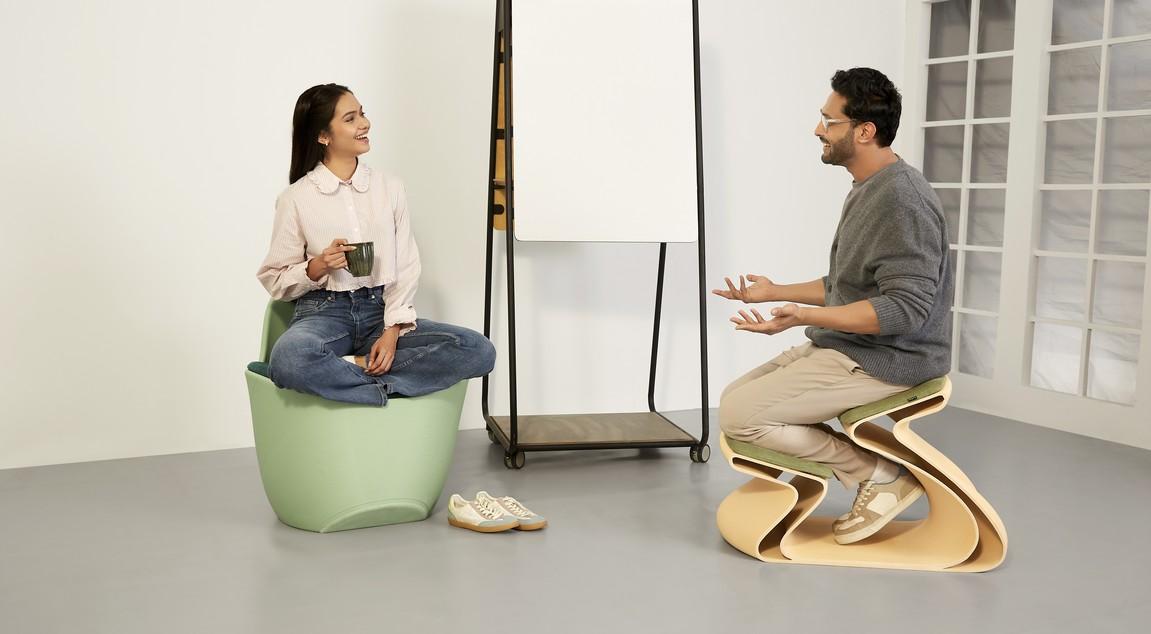
Table of Contents
|
A chair holds space for users through morning meetings, afternoon deadlines, and those quiet moments between tasks. It witnesses the way the shoulders creep upward during tense calls and how the spine curves toward the screen when focus deepens. A yoga office chair recognises these patterns and gently encourages something different.
The connection between how users sit and how users feel runs deeper than simple comfort. When seating design draws from yoga principles—balance, alignment, and mindfulness—it becomes a partner in daily well-being rather than just furniture users happen to occupy.
The relationship between office seating and a user's health unfolds quietly over months and years. Understanding this connection helps make choices that support users through every workday.
Desk-based work has become the norm for millions of professionals, with many spending 6-10 hours seated each working day. This shift carries real consequences. Data shows that 7 out of 10 employees now carry at least one lifestyle-related health concern, while lower back pain has become increasingly common among professionals under forty.
The physical effects follow predictable patterns. When users sit for extended periods, the blood flow slows and muscles tighten. Rounded shoulders and forward head posture develop from hours hunched over keyboards. Research indicates that 65% of desk workers experience musculoskeletal discomfort linked to prolonged sitting and poor posture. These aren't minor inconveniences—they affect the ability to concentrate, energy levels, and overall quality of life.
Physical tension doesn't stay isolated in the muscles. That stiffness in the shoulders often travels with mental fatigue. The slump in the posture frequently accompanies an afternoon energy dip. The human body and mind work as one system, and how users sit influences both.
This is where the concept of a yoga chair for desk work becomes meaningful. Rather than treating sitting as purely passive, yoga-inspired approaches encourage awareness of the body throughout the day. Simple shifts in position, brief stretches, and conscious breathing can interrupt the cycle of tension and fatigue that builds during long work hours.
The Wipro Eka, for example, takes this more flexible approach to workplace seating. Its design accommodates natural postural shifts rather than requiring users to remain in one fixed position, while the height-adjustable cushion allows the seating position to be adapted to different users. These features make the chair a practical fit for work environments where comfort is not just about maintaining one's posture but about being able to adjust and move as the day progresses.
Moving beyond conventional seating means rethinking what a chair should do. A yoga office chair invites movement rather than restricting it.
Traditional office chairs often lock users into a single "correct" position. While lumbar support and adjustable heights matter, this approach misses something fundamental: the body needs to move throughout the day, even while seated. Yoga-inspired seating design starts from a different premise—that gentle, continuous movement supports both physical comfort and mental alertness.
This philosophy can be seen in the Wipro Erth Chair, which takes a more relaxed approach to workplace seating. Endorsed by Swasti Yoga Centre and certified by India Ergo, its grounded sitting posture is suited to less formal moments at work, from informal conversations to impromptu meetings. Its compact footprint also makes it easy to reposition as the needs of the workspace change. Rather than treating the chair as a fixed workstation, the design fits more naturally into a workplace where people move between tasks, conversations and different ways of sitting.
|
Traditional Office Chair |
Yoga-Inspired Seating (Dyan Approach) |
|---|---|
|
Encourages static positioning |
Supports natural movement patterns |
|
Single optimal posture |
Multiple comfortable sitting positions |
|
Passive support |
Active engagement with seating |
|
Purely functional design |
Mindfulness-centred philosophy |
When a chair works with a user's body's natural tendencies, yoga becomes easier to integrate into the routine. A well-designed yoga chair for your office desk provides stability for seated twists and forward folds while encouraging the postural awareness that makes these movements effective.
Workers do not need to change clothes or even find a quiet room to do yoga at work. It doesn't even demand a significant amount of work time. These movements fit naturally into the rhythm of any workday.
Timing matters less than consistency. Experts suggest 2-3 desk stretches every 60-90 minutes, with even two minutes of movement helping reduce stiffness and reset the posture.
The beauty of yoga at work lies in its discretion. These stretches are designed to be non-sweaty and office-appropriate—users can practise them in work clothes without drawing attention or disrupting colleagues. No yoga mat or special equipment required.
Together, these practices create a simple movement routine that can be adapted to different moments of the workday, from staying seated at the desk to standing up for a brief stretch.
Yoga at work typically includes three types of practice:
Seated Poses
These focus entirely on movements users can do while remaining in the chair:
Seated twists that gently mobilise the spine
Forward folds that release lower back tension
Neck rolls that ease shoulder stiffness
Hip stretches that counter the effects of prolonged sitting
Desk-Supported Poses
Using the desk for balance, users can include the following:
Standing hamstring stretches
Gentle side bends
Chest-opening movements that counter rounded shoulders
Breathing Practices (Pranayama)
Even without moving, conscious breathing calms the nervous system:
Deep belly breaths that activate relaxation responses
Extended exhales that reduce stress
Simple awareness practices that refresh mental focus
|
Movement Insight Each of these practices addresses specific issues that develop from prolonged sitting. Alternating between flexion and extension mobilises the spine segment by segment, while deep breathing sends fresh oxygen to the brain—acting as a reset button for concentration during demanding afternoons. |
Active sitting is less about maintaining a particular posture and more about having the freedom to change position as the body and task demand. This makes the design of the chair important: its structure, adjustability and materials can either encourage movement or restrict it.
What sets yoga-inspired seating apart is the intention behind each element. Yoga chairs encourage what might be called "active sitting"—a state where the body remains gently engaged rather than passively slumped.
The design addresses a truth that conventional seating often ignores: every user's comfort needs shift throughout the day. During focused work, one might sit upright and centred. During a thinking pause, users might lean back. During a brief stretch break, workers might shift into a cross-legged position. Yoga-inspired design accommodates all these modes rather than optimising for just one.
Sustainability adds another dimension. The Matsya chair from Wipro is crafted from 80% post-consumer recycled polypropylene, reflecting an understanding that wellness extends beyond individual comfort to encompass environmental responsibility. Its design encourages a gentle rocking motion which provides sensory therapy and also proprioceptive comfort.
The real value of doing yoga at work emerges through consistent practice over time. Small, regular movements accumulate into meaningful changes.
Research supports the compounding benefits of regular seated movement. A study found that employees participating in weekly yoga sessions reported reduced perceived stress and increased feelings of energy and focus within eight weeks. The physical benefits—improved circulation, increased flexibility, reduced tension—develop alongside mental clarity and emotional balance.
When combined with thoughtful seating design, these benefits multiply. A yoga office chair that encourages natural movement throughout the day means users are not starting from a state of complete stiffness when stretching for pauses. The foundation of excellent posture is already established.
Practical tips for building your habit:
Start with just five minutes daily—consistency matters more than duration.
Set gentle reminders every hour to shift position or take a breath.
Keep movements simple and office-appropriate
Notice how the body feels before and after brief stretch breaks.
Pair movement practices with seating that supports varied postures
The goal isn't perfection. It's building awareness of their body throughout the workday and responding with small, caring actions that accumulate into lasting comfort.
The relationship of a user with a workspace evolves. A yoga office chair grows with every user, supporting not just how the workday turns out but how users want to feel years from now. The combination of mindful movement and thoughtful seating design creates a foundation for sustained energy, focus, and physical wellbeing.
For those ready to bring yoga principles into their daily workspace experience, the Dyan Collection offers seating designed with this philosophy at its heart—chairs that support the body, encourage movement, and honour the connection between how users sit and how they feel.
1. What is a yoga office chair, and how does it differ from regular seating?
A yoga office chair incorporates principles of balance, alignment, and mindful movement into its design. Unlike conventional chairs that encourage static positioning, yoga-inspired seating supports natural body shifts, varied postures, and active sitting throughout your workday.
2. Can I practise office yoga without disrupting my colleagues?
Absolutely. Office yoga movements are designed to be subtle and office-appropriate. Seated twists, gentle stretches, and breathing practices require no special equipment and can be done quietly in work clothes without drawing attention.
3. How often should I do yoga at work for noticeable benefits?
Experts recommend 2-3 brief stretches every 60-90 minutes. Even two minutes of movement helps reduce stiffness and refresh focus. Consistency matters more than duration—small, regular breaks yield compounding benefits over time.
4. What features should I look for in a yoga chair for desk use?
Look for seating that supports multiple postures, encourages gentle movement, and maintains proper spinal alignment. Features like balanced rocking mechanisms, adjustable cushions, and low-level seating options help facilitate varied sitting positions throughout your day.
5. Does performing these yoga movements at work actually help with back pain?
Incorporating regular yoga at work helps relieve muscular tension, improve posture, and increase flexibility in areas commonly affected by prolonged sitting—including the neck, shoulders, and lower back. While it supports comfort, persistent pain should be discussed with a healthcare professional.