


Search Here
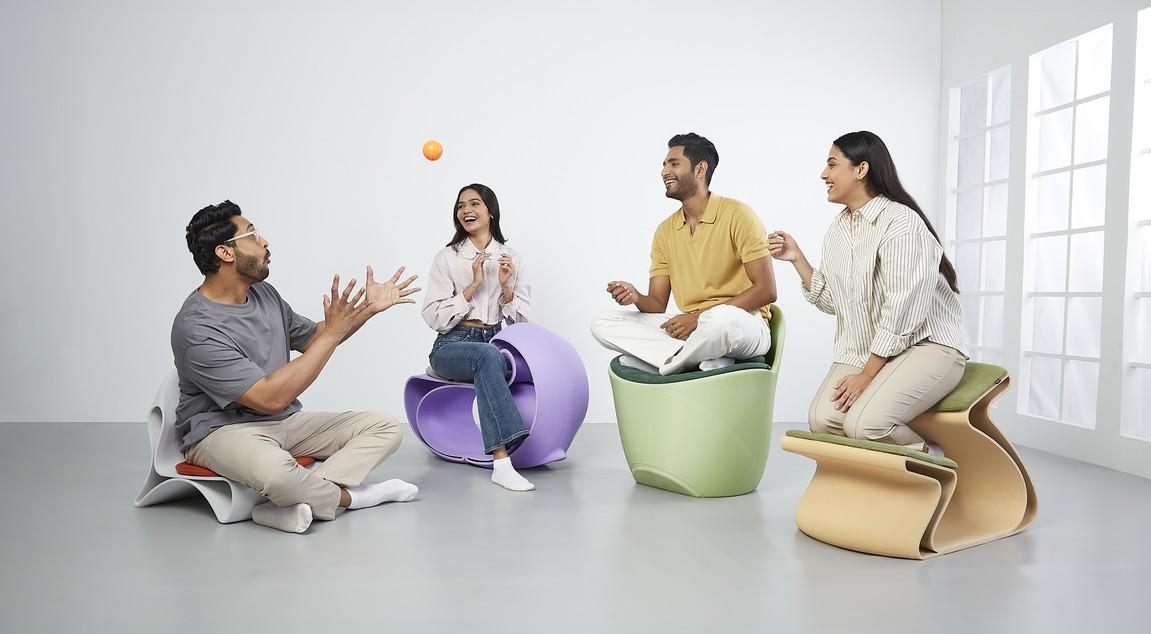
Table of Contents
|
A chair quietly accompanies employees through video calls, deadline pushes, and those long afternoons when energy dips and the back starts speaking up. It witnesses every shift, every stretch, every moment users lean forward to concentrate or back to think.
Yoga chairs bring a fresh perspective to this daily relationship. Rather than locking users into one "correct" position, these chairs invite gentle movement and postural variety—principles borrowed from the mat and adapted for the desk.
The way users sit at work has been evolving. Traditional ergonomic thinking focused on finding one ideal posture and maintaining it for hours. Contemporary research suggests a different approach—one that embraces movement as a natural part of seated work.
An active chair allows users to initiate movement while the chair mechanism
accommodates that action, promoting motion that engages different muscles and supports blood circulation. This represents a fundamental shift from passive sitting, where the chair does the supporting while the muscles disengage.
Research has shown that active sitting allows users to increase movement without requiring high muscular activation—a gentler way to stay engaged throughout the day. Studies have also found lower discomfort scores in the gluteal area when comparing active chairs to traditional non-active options.
The philosophy behind yoga chairs and similar active seating recognises that the body wasn't designed for stillness. Even small movements—a gentle rock, a subtle shift in hip position—help distribute mechanical loads and keep users more alert.
Static sitting postures sustained over prolonged periods are recognised risk factors for physical pain, particularly in the lower back. However, maintaining an ideal static posture for hours is genuinely difficult. Dynamic changes in lumbar spine and pelvis position during sitting offer an effective alternative to relieve posture-induced discomfort.
Contemporary active seating designs seek to free users from constrained postures, using dynamic surfaces and varied sitting heights to increase movement and promote healthier positions. This aligns beautifully with the principles of yoga, where gentle movement and awareness of body position form the foundation of practice.
A practical example of this design philosophy is the Wipro Matsya. Instead of encouraging users to remain in a single "correct" posture, the chair's gentle rocking mechanism supports natural shifts in sitting position throughout the day. This subtle movement helps break up prolonged static postures while allowing users to adopt multiple supported sitting positions. By making movement feel intuitive rather than intentional, the chair complements the same principles that underpin yoga—regular, gentle movement that supports both physical comfort and mental well-being during extended periods of desk work.
|
Movement Insight: Three-dimensional movement of the hips and upper body through flexible, independent motion supports the principle that changing posture is essential for productive and healthy work. |
Understanding what yoga chairs are helps clarify the need for these chairs in the modern workspace. These aren't simply chairs with a yoga-themed name—the design represents a philosophy that accommodates how many people naturally prefer to sit.
Yoga chairs accommodate alternative sitting positions commonly practised in yoga and meditation, adapted thoughtfully for work environments. They allow you to sit cross-legged, kneel, or shift between positions while remaining productive at your desk.
The Eka by Wipro Seating Solutions embodies this philosophy. The chair reflects a harmonious blend of human-centric design, refined aesthetics, and intelligent ergonomics. The design is endorsed by Swasti Yoga Centre, which aligns with healthy sitting posture, and certified by India Ergo for delivering postural benefits during use.
This approach recognises that floor sitting and cross-legged positions are natural and comfortable for many people, yet conventional office furniture rarely accommodates these preferences. A well-designed yoga lounge chair bridges this gap.
The biomechanical rationale behind these designs acknowledges that different tasks, body types, and individual preferences benefit from postural flexibility. The ability to change positions throughout the day—from conventional sitting to cross-legged to kneeling—helps distribute loads across different muscle groups.
|
Sitting Style |
Traditional Chair |
Yoga Chair |
Comfort Benefit |
|---|---|---|---|
|
Upright desk work |
Supported |
Supported |
Familiar productivity position |
|
Cross-legged sitting |
Uncomfortable/impossible |
Accommodated |
Natural for focus and reflection |
|
Kneeling position |
Not possible |
Available |
Engages core, opens hip flexors |
|
Gentle rocking |
Fixed |
Enabled |
Reduces stiffness during long tasks |
Lumbar disc pressure correlates strongly with sitting postures and activity level, making practical methods to prevent lumbar flattening an important ergonomic consideration. Yoga chairs address this by encouraging natural pelvic movement rather than forcing static positions.
The need for thoughtful seating solutions has never been more pressing. Office workers spend approximately two-thirds of the total work time sitting, and the consequences are becoming increasingly visible in younger professionals.
Studies report work-related musculoskeletal disorder prevalence of 80.81% across office worker cohorts, with specific rates of 58.6% for neck pain, 52.5% for lower back issues, and 37.4% for shoulder complaints.
As economies transition toward knowledge-based industries, the number of desk-based jobs continues rising, prompting increases in poor posture-related issues that impact health and productivity across the workforce.
One approach is to incorporate furniture that encourages greater postural variety rather than prolonged static sitting. The Wipro Erth is an example of this philosophy. Designed to support a range of floor-based and yoga-inspired sitting positions—including Malasana, Dandasana, and Marichyasana—it encourages users to alternate between postures instead of remaining seated in the same way for hours. These yoga asanas are commonly practised to improve flexibility, relieve muscle tension, and promote relaxation, making them a practical complement to movement-based ergonomic strategies. Its compact footprint also makes it easy to reposition within different workspaces, helping users adapt their environment as they change tasks or postures throughout the day.
Most home-office setups remain improvised—a laptop on a dining table, a kitchen chair, and a neck bent forward for hours. Over time, this leads to repetitive strain, neck pain, and posture damage that becomes difficult to reverse.
Wrist pain, lower back issues, and shoulder stiffness are now common complaints among employees in their late twenties, demonstrating how early ergonomic problems manifest in young professionals. A chair for yoga-inspired sitting can offer relief by providing postural variety without requiring complete workstation overhauls.
The practical integration of yoga chairs into existing work routines proves simpler than many expect. These solutions work within any current setup rather than demanding dramatic changes.
Using an active chair for its associated benefits is a feasible method of increasing movement for office workers. Incorporating such a chair doesn't require additional workstation changes—users can actively move when needed but also simply sit when focused work demands stability.
Key advantages of yoga lounge chair integration include the following:
No setup changes required: Works with the existing desk and workspace
Minimal learning curve: Requires little instruction beyond initial positioning
Flexible use patterns: Move actively or sit still based on the task
Combines with standing: Pairs well with sit-stand desk routines for maximum variety
However, research reveals an important consideration: although dynamic chairs provide freedom of motion, many users don't initially take full advantage of the increased range, often using only a few potential sitting positions. Building awareness of your sitting habits helps you benefit more fully from yoga chairs.
When evaluating any chair for yoga-inspired sitting, several factors deserve attention.
Quality indicators to consider:
Postural flexibility: Does the chair accommodate multiple sitting positions comfortably?
Stability with movement: Can users shift and rock without feeling unstable?
Materials and sustainability: The Dyan Collection, for instance, uses 80% post-consumer recycled polypropylene.
Certifications: Look for ergonomic endorsements from credible organisations.
Space efficiency: Compact footprints suit modern, space-conscious environments.
Yoga chairs represent one meaningful piece of a comprehensive approach to feeling better at work. They honour the body's need for movement while respecting the practical demands of desk-based productivity. When combined with regular breaks, thoughtful workstation setup, and awareness of a user's sitting habits, they support genuine long-term comfort.
If organisations are curious about seating designed with your comfort, posture, and wellbeing in mind, the Dyan Collection by Wipro Seating Solutions offers yoga chairs that bring balance and mindful movement into everyday workspaces.
1. What are yoga chairs, and how do they differ from regular office chairs?
Yoga chairs accommodate alternative sitting positions like cross-legged or kneeling postures, encouraging natural movement throughout a workday. Unlike traditional office chairs that support one fixed position, they invite postural variety and gentle motion.
2. Can the principles of yoga really apply to office seating?
Yes. Yoga emphasises gentle movement, body awareness, and postural flexibility—principles that translate well to workplace seating. Active chairs allow similar benefits during work without requiring separate exercise time.
3. How does a yoga lounge chair support better posture?
A yoga lounge chair distributes mechanical loads across different muscle groups by allowing varied sitting positions. This reduces sustained pressure on specific areas and encourages natural spinal alignment through movement.
4. Are yoga chairs suitable for long work hours?
Yoga chairs work well for extended sitting when combined with regular breaks. They encourage postural shifts that help reduce stiffness, though they complement rather than replace standing and movement breaks.
5. What should I look for when choosing a chair for yoga-inspired sitting?
Quality chairs for yoga-inspired sitting should accommodate multiple positions comfortably, provide stability during movement, use durable materials, and carry credible ergonomic certifications for postural benefits.
6. Do yoga chairs require special workstation modifications?
No. Most yoga chairs integrate seamlessly with existing desks and workstations. They require minimal instruction beyond understanding optimal positioning and developing awareness of varied sitting options.