


Search Here
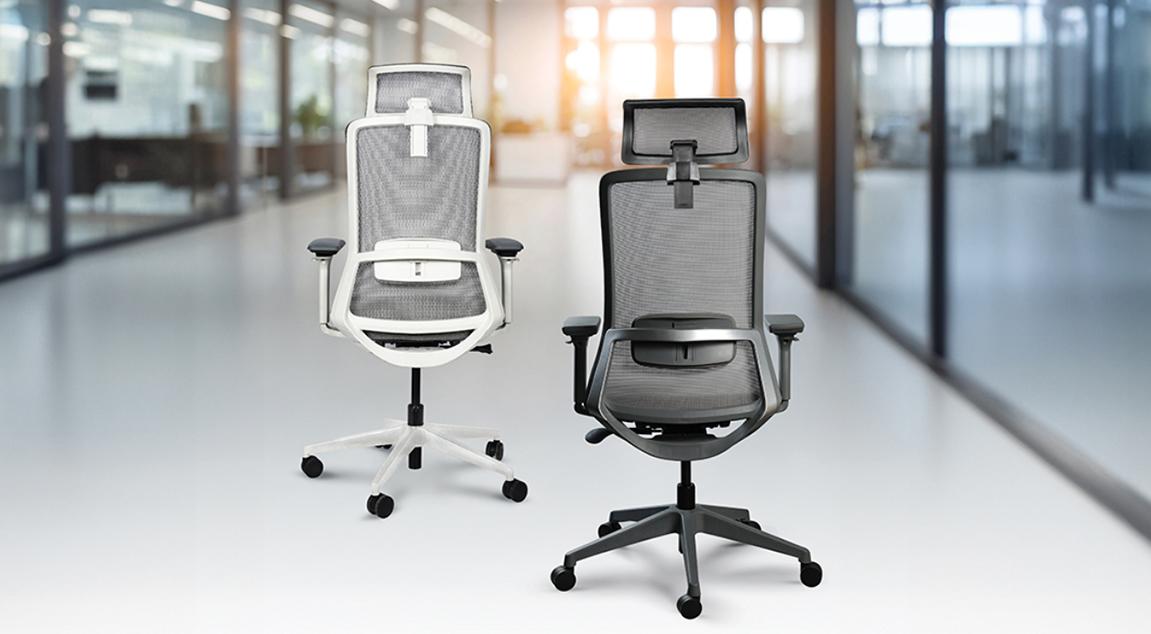

The modern workplace has fundamentally shifted. With 75% of CEOs acknowledging that hybrid work has improved productivity, organisations must rethink office seating and workspace design strategies. The challenge lies in creating adaptable environments that support fluctuating occupancy rates while maintaining ergonomic standards for employee health and comfort.
This guide explores how to design flexible workspaces that accommodate hybrid work patterns, focusing on ergonomic seating solutions, modular furniture systems, and evidence-based design principles that boost both productivity and employee wellbeing.
The shift to hybrid work has created new demands for office design. Companies report a 30% reduction in workspace needs while achieving better employee outcomes.
This transition to hybrid work has created new ergonomic challenges that flexible workspace design must address. Research shows that many work-from-home employees report musculoskeletal discomfort related to their seating arrangements, with many alternating between poorly equipped home offices and shared workplace stations.
Hybrid workspaces must accommodate varying daily attendance patterns while providing consistent ergonomic support. Research shows that employees working in hybrid arrangements experience 19% productivity gains, but only when their workspace properly supports both collaborative and focused work modes.
Key requirements include adjustable office seating that multiple users can customise throughout the day, modular desk systems that reconfigure quickly for different team sizes, and technology infrastructure supporting seamless connectivity between remote and in-office workers. The flexibility to shift between individual focus zones and collaborative areas has become essential.
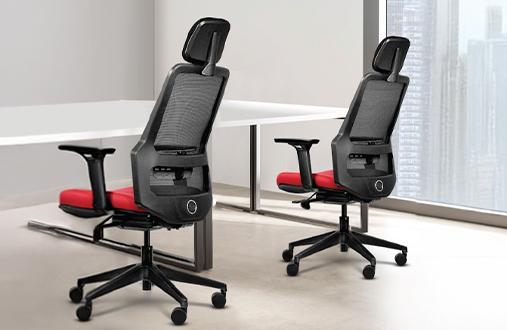
Take the Wipro Beetle, for instance; it has a small footprint and can easily adapt to dynamic office layouts. The adjustable armrests, lumbar support and synchro tilt locking make it comfortable as well.
Studies indicate hybrid workers take 36% fewer sick days, and 75% of the workforce does not experience burnout symptoms, unlike workers who are at the office throughout the week. This improved health directly correlates with workspace design that supports movement, proper posture, and varied work positions throughout the day.
The ability to choose appropriate seating and workspace configurations for specific tasks enhances both physical comfort and cognitive performance. Employees who can adjust their environment report higher job satisfaction and demonstrate measurably better retention rates.
Selecting chairs for hybrid workspaces requires balancing individual ergonomic needs with multi-user functionality. The right seating must adapt quickly while maintaining support standards.
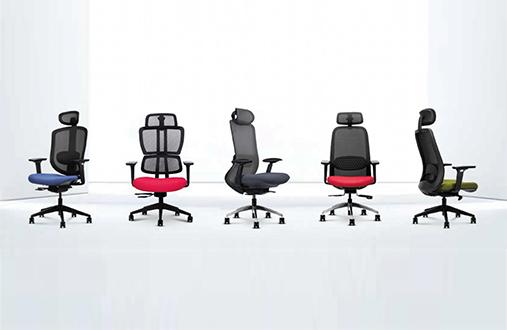
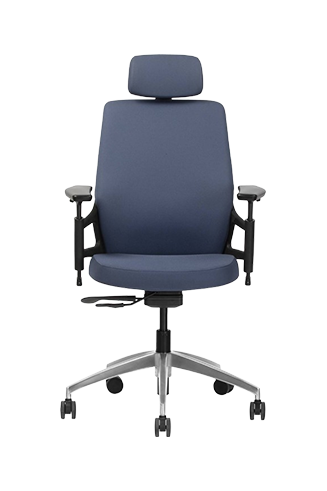
Chairs designed with features such as automatic tension adjustment can help accommodate varying body weights and sitting preferences without requiring constant manual recalibration. Similarly, breathable mesh backs are particularly practical in hot and humid climates, as they promote airflow and reduce heat build-up during extended sitting. For example, models like the Wipro It's Me Chair incorporate these kinds of adaptive and climate-responsive features, illustrating how flexible seating can support both ergonomic consistency and everyday usability in shared work environments.
BIFMA X5.1 standards establish baseline requirements for commercial seating, specifying tests for heavy users up to 275 pounds over ten-year lifecycles. For hybrid environments where different employees use the same chair daily, prioritise these adjustable features:
Seat height mechanisms should offer a range of 15-20 inches, accommodating users from 5th percentile females to 95th percentile males. Pneumatic adjustment allows quick changes between users without tools. Lumbar support requires both height and depth adjustment, as lower back curve positions vary significantly between individuals. Without proper lumbar positioning, users develop muscle fatigue and chronic pain from unsupported sitting.
Armrests need minimum height adjustability of 6.7-10.6 inches from the seat surface, with 3D or 4D movement preferred for varied task support. Width adjustment accommodates different shoulder widths and work styles. Seat depth adjustment prevents pressure behind knees for shorter users while providing adequate thigh support for taller individuals.
In warm, humid climates, breathable mesh backrests prevent heat buildup during extended sitting periods. High-quality mesh materials maintain their tension and support properties through thousands of adjustment cycles, essential for chairs serving multiple users daily. Seat cushions using high-resilience foam rated for commercial use resist permanent compression better than residential-grade materials.
Fabric selection affects both hygiene and durability in shared seating environments. Antimicrobial treatments and easy-clean surfaces have become standard requirements, especially as health consciousness remains elevated post-pandemic. Materials meeting BIFMA durability standards ensure consistent performance despite frequent adjustments and varied user weights.
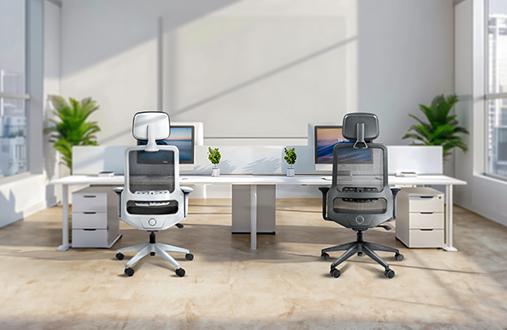
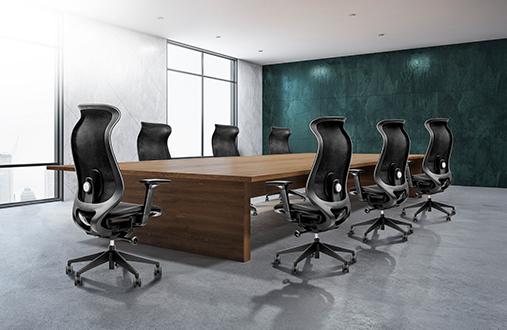
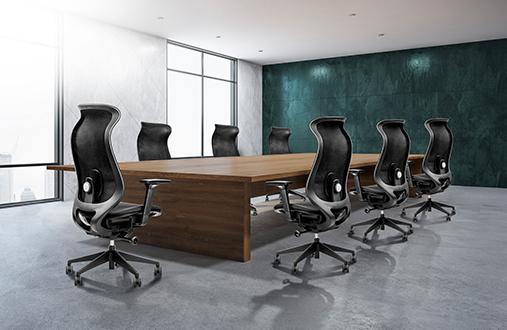
The Wipro Entity Chair sports a full mesh back which not only keeps the heat and sweat at bay but also ensures even weight distribution for maximum comfort. Adjustment options for the seat height and tilt angle make it multi-user-friendly as well.
Creating truly flexible workspaces requires furniture that adapts as quickly as work patterns change. Modular systems enable rapid reconfiguration without specialised tools or significant effort.
Effective modular systems incorporate several key characteristics that support hybrid work patterns:
Height-adjustable desks on lockable casters transform from individual workstations to collaborative surfaces within minutes. The ability to raise surfaces to standing height accommodates employees who alternate between sitting and standing throughout their workday. Movable privacy screens attach and detach without tools, creating instant focus zones or opening spaces for team interaction.
Storage units serving dual purposes as space dividers maximise functionality in limited square footage. These mobile elements create boundaries without permanent walls, allowing organisations to reshape spaces based on daily attendance and activity needs.
Lightweight office seating options that stack or nest efficiently support overflow capacity without consuming valuable floor space when not needed.
Modern hybrid workspaces require seamless technology integration at every potential work point. 72% of employees believe most company technology needs improvement for effective remote work support. Successful implementations include power and data access points in modular furniture bases, eliminating cord management issues during reconfigurations.
Video conferencing capabilities must extend beyond dedicated meeting rooms. Individual workstations need proper camera positioning, acoustic treatment, and lighting to support professional virtual presence. Modular furniture systems incorporating these technology elements allow any space to transform into an effective hybrid meeting zone.
Organisations implementing flexible workspace designs with quality ergonomic office seating see measurable returns through multiple channels. Understanding these metrics helps justify initial investments.
Companies report average cost savings of $11,000 per employee annually in hybrid environments, with workspace expenses dropping through efficient space utilisation. Employee turnover decreases by 33% on average, with some organisations seeing retention improvements of up to 65%.
Beyond financial metrics, employee wellbeing indicators show significant improvements. Hybrid workers report better mental health (66%), physical health (62%), and social wellbeing (64%) compared to traditional office arrangements. These improvements directly link to workspace designs that support varied work postures, encourage movement, and provide appropriate ergonomic support throughout the workday.
Investment in BIFMA-certified office seating from manufacturers like Wipro Seating Solutions ensures long-term durability while maintaining ergonomic standards. Quality seating rated for multiple years of commercial use provides better lifetime value than frequent replacements of lower-grade alternatives.
Designing effective hybrid workspaces requires balancing flexibility with ergonomic integrity. Focus on office seating systems offering comprehensive adjustability, modular furniture enabling quick reconfiguration, and technology infrastructure supporting seamless collaboration. By prioritising employee comfort and health through evidence-based design choices, organisations create environments that enhance productivity while reducing long-term costs through improved retention and reduced sick days.