


Search Here

Table of Contents
|
Every procurement team has likely encountered the frustration of chairs that looked promising in catalogues but failed within months of heavy use. Gas lifts that sink unexpectedly, armrests that crack under normal pressure, or recline mechanisms that grow wobbly—these failures disrupt workdays and drain budgets.
Understanding what separates genuinely tested seating from marketing claims helps organisations make smarter purchasing decisions. A BIFMA-certified chair offers documented proof of durability, and knowing how to verify this compliance protects the investment and the team's wellbeing.
Before examining specific tests, it helps to understand the organisation behind these standards and the precise terminology that matters for procurement decisions.
BIFMA stands for the Business and Institutional Furniture Manufacturers Association, a non-profit organisation composed of industry leaders that develops, maintains, and publishes safety and performance standards for commercial furniture. Since 1973, BIFMA has served as the voice of the commercial furniture industry, establishing benchmarks that manufacturers worldwide now reference.
As an American National Standards Institute (ANSI) accredited standards developer, BIFMA's guidelines carry weight beyond North America, serving as global benchmarks for quality and safety. When an organisation specifies a BIFMA-certified chair, it is referencing testing protocols recognised across international markets.
A crucial distinction for procurement teams: BIFMA doesn't technically "certify" products. Instead, products comply with the already listed standards after testing by independent laboratories. The accurate terminology is "BIFMA compliant" or "tested to BIFMA standards".
However, the BIFMA Compliant® Product Registry exists to help buyers identify products with documented conformance rather than relying solely on marketing language.
Products listed in this registry have passed required testing through accredited, independent third-party laboratories—removing doubt about whether quality credentials were genuinely earned.
The testing protocols behind BIFMA certification go far beyond simple weight capacity claims. These assessments simulate years of aggressive daily use, pushing chairs to the mechanical limits.
ANSI/BIFMA X5.1 is the specific standard for general-purpose office chairs, containing defined tests related to safety, durability, stability, and structural performance. Unlike basic weight capacity measurements—which only assess what a chair can hold before collapsing—BIFMA tests simulate years of real-world stress.
|
Test Type |
What Happens |
Requirement |
|---|---|---|
|
Seat Durability |
A 225 lb load dropped onto the seat. |
200,000 cycles with no structural failure |
|
Backrest Durability |
150-lb force applied to backrest |
200,000 cycles without damage |
|
Seating Cycles |
A 125 lb weight dropped from a specific height. |
125,000 cycles simulating sit-down force |
|
Chair Stability |
Weighted discs test tipping resistance. |
The chair must not fall when tilted. |
The comprehensive testing battery also includes backrest strength tests, arm strength and durability assessments, chair leg strength evaluations, and structural durability testing. When a chair withstands this barrage of testing, it earns approval, confirming its readiness for demanding workplace environments.
BIFMA does not operate testing laboratories or test furniture products itself. Instead, conformance testing is conducted by in-house or independent third-party laboratories accredited to ISO/IEC 17025, helping ensure competent and impartial testing. For products participating in the BIFMA-compliant programme, BIFMA verifies that testing was performed in accordance with the programme requirements rather than relying solely on manufacturer marketing claims.
All ANSI/BIFMA testing remains voluntary, with furniture companies independently choosing whether to submit products. This voluntary nature means manufacturers who pursue compliance are actively investing in quality verification—a commitment that often extends to better warranty coverage as well.
Beyond technical specifications, BIFMA certification delivers tangible organisational benefits that affect budgets, legal exposure, and employee wellbeing.
Safety is one of the primary objectives of ANSI/BIFMA standards. Office chairs are subjected to a series of stability, strength, impact, and durability tests designed to identify potential failure points before products reach the workplace. These assessments evaluate whether a chair can withstand the loads and repeated stresses expected during normal commercial use while maintaining structural integrity.
This matters because chair failures can have real consequences. A collapsed gas lift, broken armrest, detached backrest, or unstable base can result in falls, sprains, impact injuries, or other workplace incidents. Beyond the immediate physical harm to employees, such events may lead to medical expenses, workers' compensation claims, lost productivity, equipment replacement, and administrative costs associated with incident investigations.
While no testing standard can eliminate every risk, selecting chairs that conform to recognised ANSI/BIFMA requirements demonstrates that safety has been considered as part of the procurement process. For organisations with occupational health and safety obligations, purchasing products that meet established industry standards also supports a more structured approach to workplace risk management and due diligence.
Office seating is a long-term investment, making durability just as important as the purchase price. While lower-cost chairs may reduce upfront expenses, premature failures—such as faulty gas lifts, cracked armrests, worn casters, or loose recline mechanisms—can lead to higher maintenance costs, frequent replacements, and increased downtime.
ANSI/BIFMA standards help minimise these risks by requiring chairs to undergo rigorous strength, stability, and durability testing under controlled laboratory conditions. Instead of assessing only weight capacity, the standards evaluate how key components perform under repeated use, providing greater confidence in a chair's ability to withstand the demands of everyday commercial environments.
For organisations furnishing multiple workstations, investing in chairs that conform to ANSI/BIFMA standards can reduce maintenance requirements, extend furniture service life, and lower the total cost of ownership. While compliance does not guarantee a specific lifespan, it demonstrates that a chair has met recognised performance and durability requirements through objective testing.
|
Procurement Insight: Quality Signals Manufacturers who invest in BIFMA testing typically back the products with stronger warranties. This correlation makes sense—companies confident in the construction quality are willing to stand behind the products longer. When evaluating suppliers, ask about both compliance documentation and warranty terms. |
Knowing that BIFMA certification matters is one thing; verifying compliance during actual procurement is another. These practical steps help a team make informed decisions.
Don't rely solely on sales presentations. Ask whether chairs are listed in the BIFMA Compliant® Product Registry, and if not, request full, unedited third-party test reports for ANSI/BIFMA X5.1. A product page stating only "BIFMA tested" without naming the specific standard or edition doesn't provide meaningful verification.
The verification checklist should include:
Labels stating "Meets BIFMA X5.1" or "BIFMA Compliant"
Third-party laboratory test documentation
Current edition compliance (standards are periodically updated)
Registry listing verification for bulk purchases
Warranty terms that reflect manufacturer confidence
In a market saturated with products claiming to be "commercial-grade" and "ergonomic", these terms have lost specific meaning. Independent verification through BIFMA certification provides the objective quality assessment that marketing language cannot.
ANSI/BIFMA standards establish important benchmarks for a chair's safety, durability, and structural performance. However, meeting these standards does not automatically guarantee that a chair will suit every user or provide optimal ergonomic support. A chair may perform exceptionally well in laboratory tests yet still cause discomfort if it cannot be adjusted to fit the individual using it.
The most effective ergonomic chairs combine ANSI/BIFMA-compliant construction with a wide range of user adjustments. Since workplaces accommodate people of different heights, weights, and body proportions, a chair should be adaptable enough to fit the majority of the adult workforce. Adjustable seat height, seat depth, lumbar support, armrests, and recline settings enable users to achieve a comfortable, well-supported posture throughout the workday.
When evaluating an office chair, consider the following ergonomic features in addition to its compliance with recognised performance standards:
|
Feature |
Why It Matters |
What to Check |
|---|---|---|
|
Lumbar Support |
Maintains lower spine curve during extended sitting |
Adjustable depth and height positioning |
|
Seat Depth |
Accommodates varying leg lengths |
Sliding seat pan or multiple size options |
|
Armrest Adjustability |
Prevents shoulder and neck tension |
Height, width, and pivot adjustments |
|
Recline Mechanism |
Encourages movement throughout the day |
Tension control and locking positions |
For enclosed offices and home workspaces, material safety is another important consideration. Chairs certified under CII Green Pro are accredited by the Global Ecolabelling Network (GEN). These certifications can help organisations use greener ways to construct, operate and maintain assets/services.
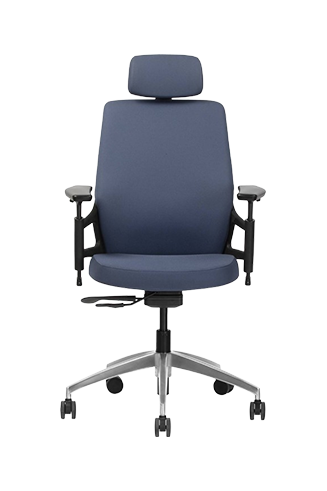
Some commercially available office chairs incorporate these principles by combining recognised certification with ergonomic adjustability. For example, the Wipro Adapt carries both ANSI/BIFMA and ISO certifications while offering features such as an automatic weight-sensing mechanism that adjusts recline resistance based on the user's body weight. It also includes a three-position locking mechanism, allowing users to alternate between different recline angles rather than remaining in a fixed posture throughout the day. These features illustrate how compliance standards and ergonomic design can work together to support a broader range of users.
Specifying a BIFMA-certified chair protects an organisation's investment while prioritising employee safety and long-term comfort. The testing protocols behind BIFMA-compliant seating provide objective quality verification that marketing claims simply cannot match.
When evaluating the next seating procurement, look beyond surface aesthetics to documented performance standards. A team's daily comfort and the organisation's budget deserve that due diligence. Browse Wipro's BIFMA-tested office chairs to find seating built with verified quality and ergonomic thoughtfulness for modern workplaces.
1. What does a BIFMA-certified chair guarantee about quality?
A BIFMA-certified chair has passed independent laboratory testing for structural safety, durability, and stability. The chair has withstood thousands of simulated use cycles, confirming it can handle demanding workplace environments without premature failure.
2. How can procurement teams verify BIFMA compliance?
Request third-party laboratory test reports and check whether products appear in the BIFMA Compliant® Product Registry. Authentic BIFMA-compliant products will specify the exact standard edition tested.
3. Does BIFMA certification cover ergonomic comfort?
BIFMA certification focuses on structural integrity and safety rather than ergonomic fit. Organisations should evaluate adjustability features separately to ensure chairs accommodate their teams' diverse body types and working styles.
4. How long should a BIFMA-certified chair last?
BIFMA durability testing simulates many years of daily use. A properly maintained BIFMA-certified chair should provide reliable service throughout this period under normal office conditions.
5. Are BIFMA standards recognised internationally?
BIFMA standards are globally recognised benchmarks for office furniture quality. Architects, facility managers, and corporate buyers across markets specify BIFMA-compliant seating as minimum requirements.
6. What other certifications complement BIFMA compliance?
GREENGUARD certification addresses indoor air quality and chemical emissions, while ISO certifications verify manufacturing quality systems. Together with BIFMA certification, these standards provide comprehensive quality assurance.